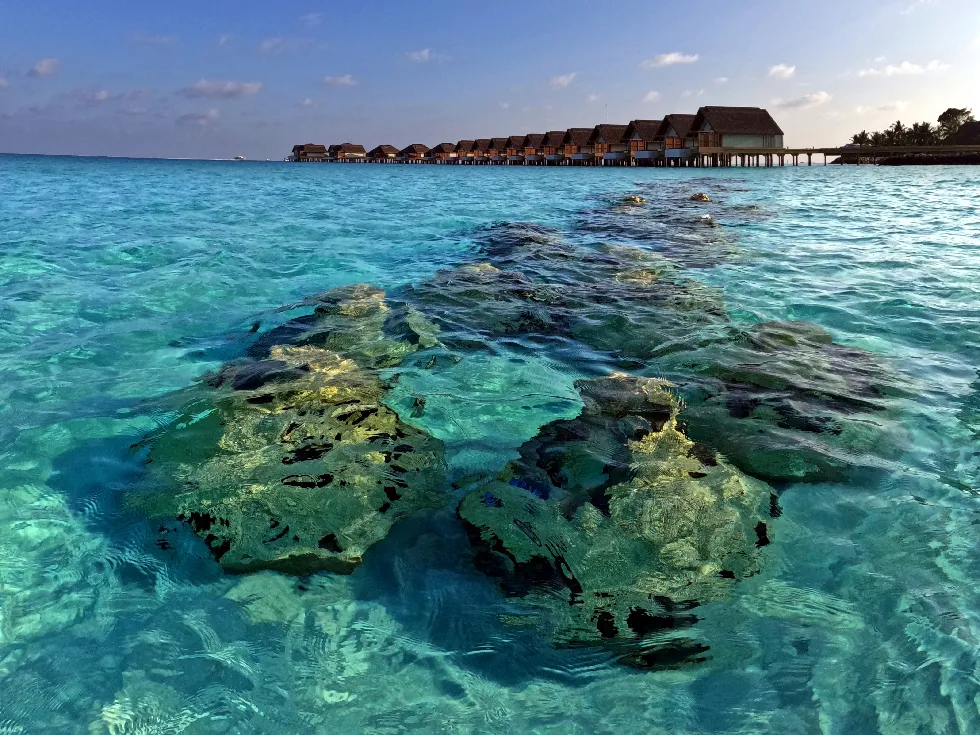
Protect and rebuild your shoreline naturally, effectively, and efficiently, while creating marine habitat. ALL without disrupting your BEACH. The latest science, deployed in the water.

Traditional coastal protection is designed to fight the ocean. Seawalls and groins interrupt the natural movement of sand requiring beaches to be replenished through repeated sand pumping. These approaches are costly to maintain, can disrupt resort operations, and often need to be repeated yearly as erosion returns.

Coastal Assembly takes a different approach. Our engineered reef structures are precisely placed to utilize wave and current energy to encourage natural sand migration toward the beach while creating new reef habitat for marine life. Instead of continually pumping sand, we restore the processes that build and maintain the beach naturally, allowing the shoreline to continue evolving long after installation.

Get updates on new deployments, results from the water, and what we're learning along the way.

IT STARTED
IN A TANK AT MIT

Coastal Assembly was born from the Self-Assembly Lab at MIT, where we spent years making waves in tanks and running simulations to show that the same forces that wash a beach away can be guided to build it back.

Coastal Assembly was born from the Self-Assembly Lab at MIT, where we spent years making waves in tanks and running simulations to show that the same forces that wash a beach away can be guided to build it back.

INTELLIGENCE

INTELLIGENCE
PLATFORM

Today, our intelligence platform folds years of satellite imagery, wave and current records, and seabed bathymetry into a working model of how a coastline moves, and where it's headed next.

Over a decade, we've been teaching software to read a shoreline. It ingests years of satellite imagery, wave and current records, tide and swell data, and the shape of the seabed, then extracts how a coastline has moved and projects where it's heading. It flags the stretches eroding fastest and projects an outlook. Every place we've studied stays on the map, growing a record of how the world's coastlines behave. That record is what tells us where our structures have to go.

BUiLD & DEPLOY

We fabricate the structures locally and lower them onto the seabed, where waves and currents do the rest. No pumps, no pipes, no dredging, no power of any kind.

No two sites get the same solution. We model how sand moves at your coastline specifically, and the structures are shaped and positioned for it, down to their spacing and angle to the incoming waves. Each one is cast near the site and placed by a small crew from a single barge, in days, not months. Once they're down, there's nothing to run and nothing to maintain. The same forces that were stripping sand away start returning it, and the structures themselves become reef, colonized by coral and fish within the first year.

GROW

At the JW Marriott Maldives, the ocean built ninety feet of new beach in six months. We just told it where.

Fifty-four structures, placed in a hexagonal pattern about thirty meters long, and the ocean built the rest. No sand was pumped in and none was trucked from anywhere else. Every grain came from the water that was already there. We track each site against the model's forecast and keep tuning as conditions shift, so the shoreline keeps building long after we leave. A satellite pass this past June, well after the original study window, showed the beach still gaining.

clients

JW MARRIOTT MALDIVES | TAJ EXOTICA

JW MARRIOTT MALDIVES | TAJ EXOTICA

est. 2017

BUILDING COASTLINES
WITH INTELLIGENCE

COASTAL

COASTAL

ASSEMBLY

ASSEMBLY

®